Flyte
I built a carpooling app 2,000 people used. Then I paused it. Here's what I learned.
- Status
- 2,000+ users€15K securedPwC WinnerVivaTech Exhibitor
- Metrics
- 2,000+users€15Kin grants & prizes
- Stack
- Flutter · Dart · Firebase · Stripe Connect · Google Maps API · Cloud Functions
01 — Overview
02 — The insight
I figured that carpooling was the most accessible way to reduce your carbon footprint. Not everyone can afford an electric car. Public transport doesn't go everywhere. Walking and cycling aren't reliable for every distance or every season. Shared rides are the obvious answer — and yet almost nobody uses them.
I spent time understanding why. Three reasons kept coming up. First, nobody wants to share a ride with a stranger — it's a trust problem, not a convenience problem. Second, existing platforms require planning ahead: you need to coordinate, confirm, and commit, which kills any sense of spontaneity. Third, carpooling today is purely transactional — you pay to get from A to B, and that's it. No social dimension, no reason to choose it when you have alternatives. People only carpool when they have no other option — never because they want to.
So I reckoned that a platform must surface those opportunities differently. If two people from your university are driving to the beach on Saturday with three empty seats — that trip is already happening. You just don't know about it. Turn strangers into community, add spontaneity, make it social — and carpooling stops being a last resort and starts being something people actually choose.
03 — The Product
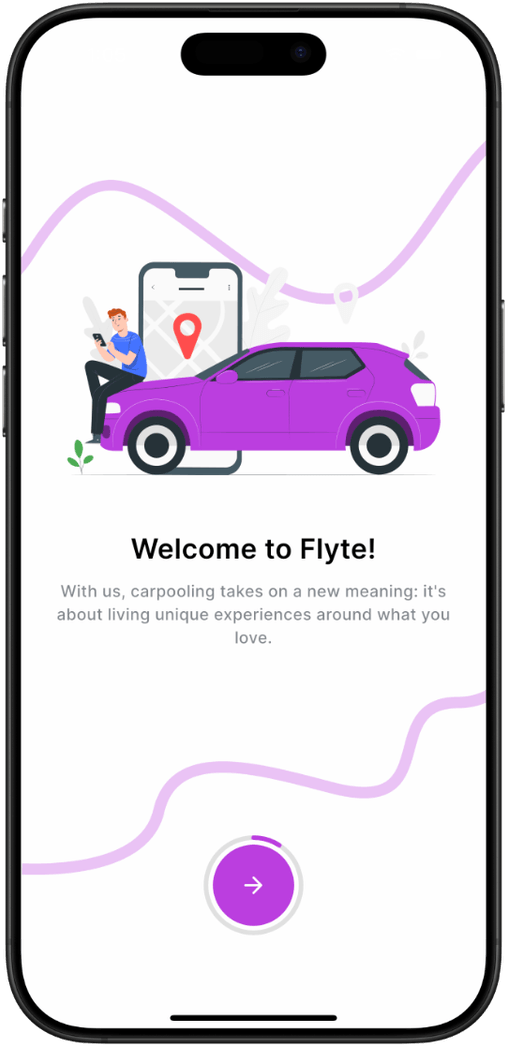
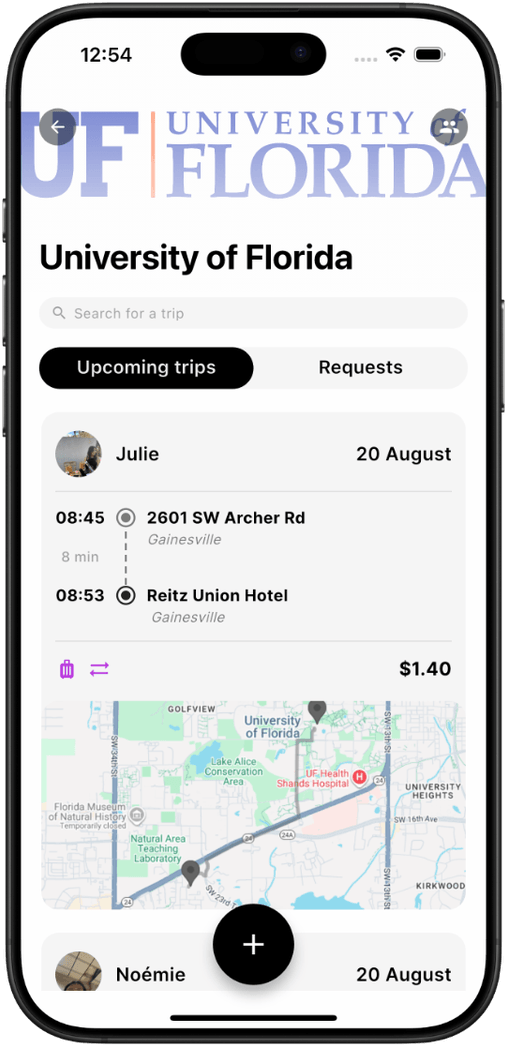
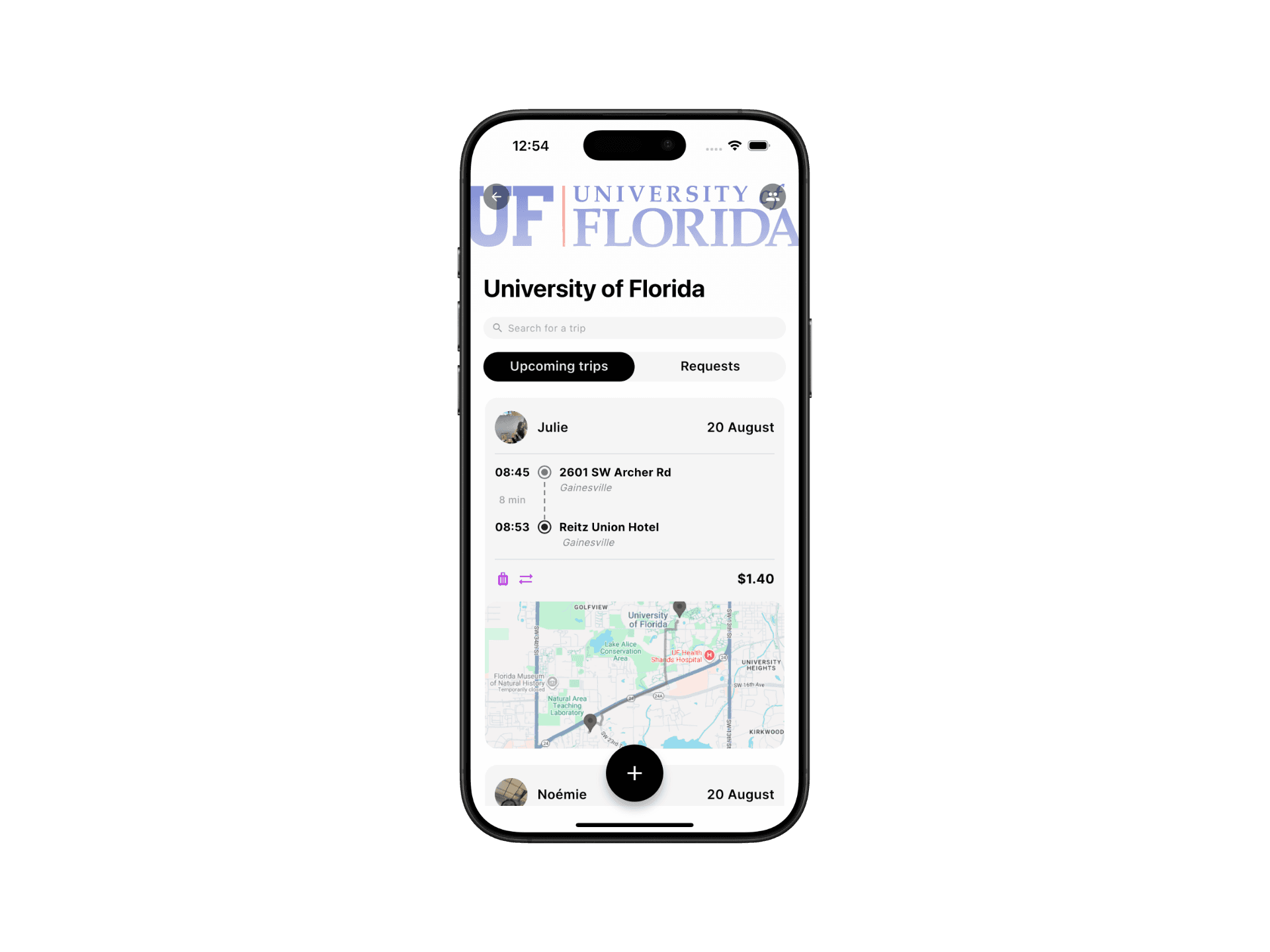
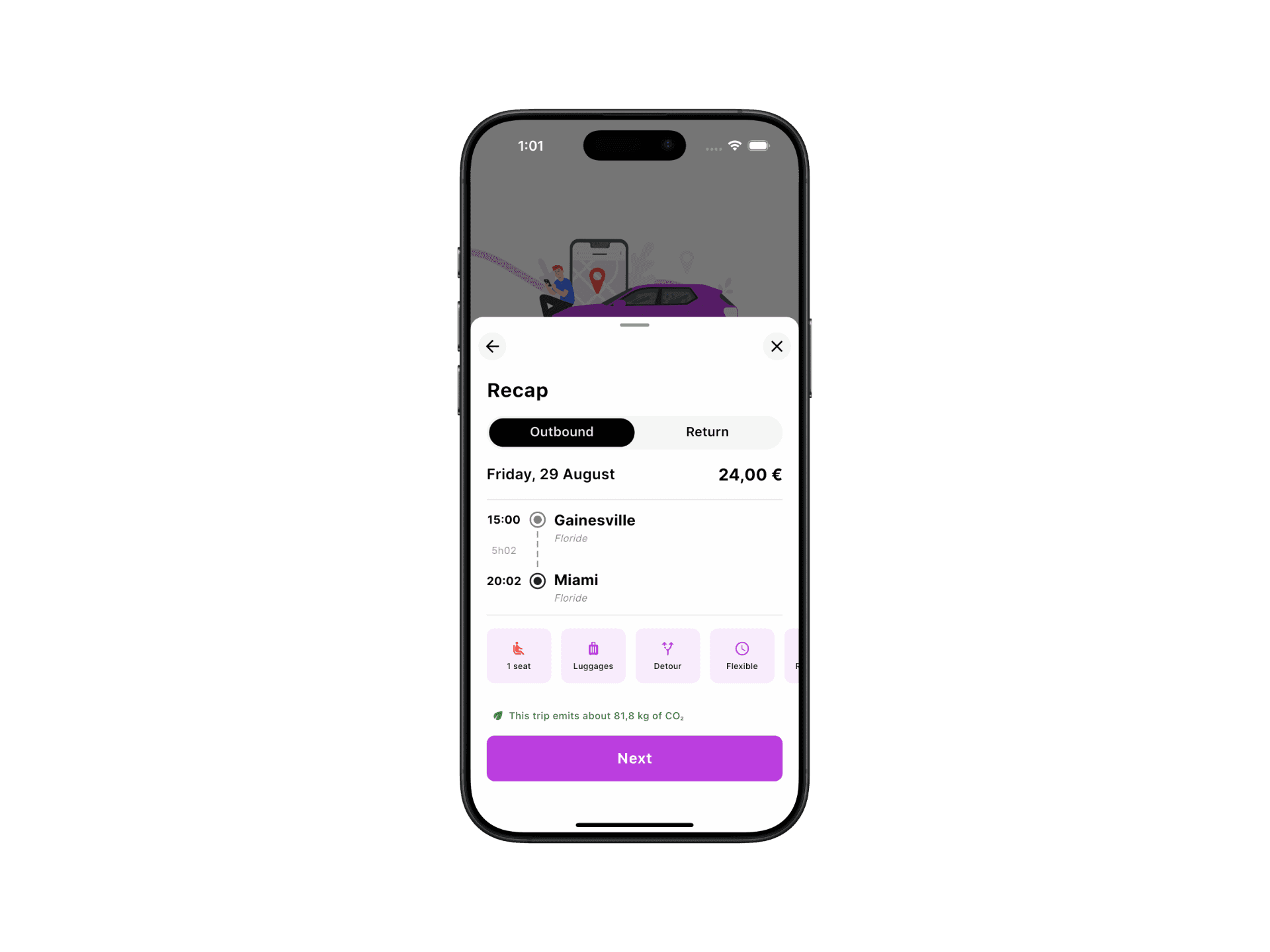
Users join verified community groups and inside those groups — and across a unified home feed — they can browse every planned trip and ride request from people they already have a reason to trust.
That feed is what made Flyte social. If someone from your university is driving to the beach on Saturday with three empty seats, that trip is visible to you. You might not have planned it. Flyte turns carpooling from something you organise into something you discover.
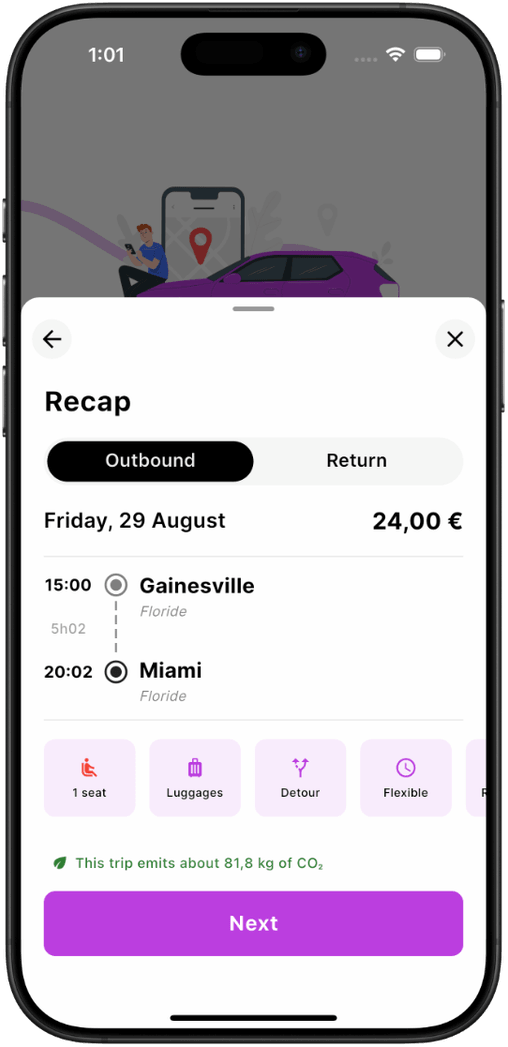
Under the hood: in-app messaging, Stripe Connect for marketplace payments, Google Maps for route calculation.
04 — How We Grew
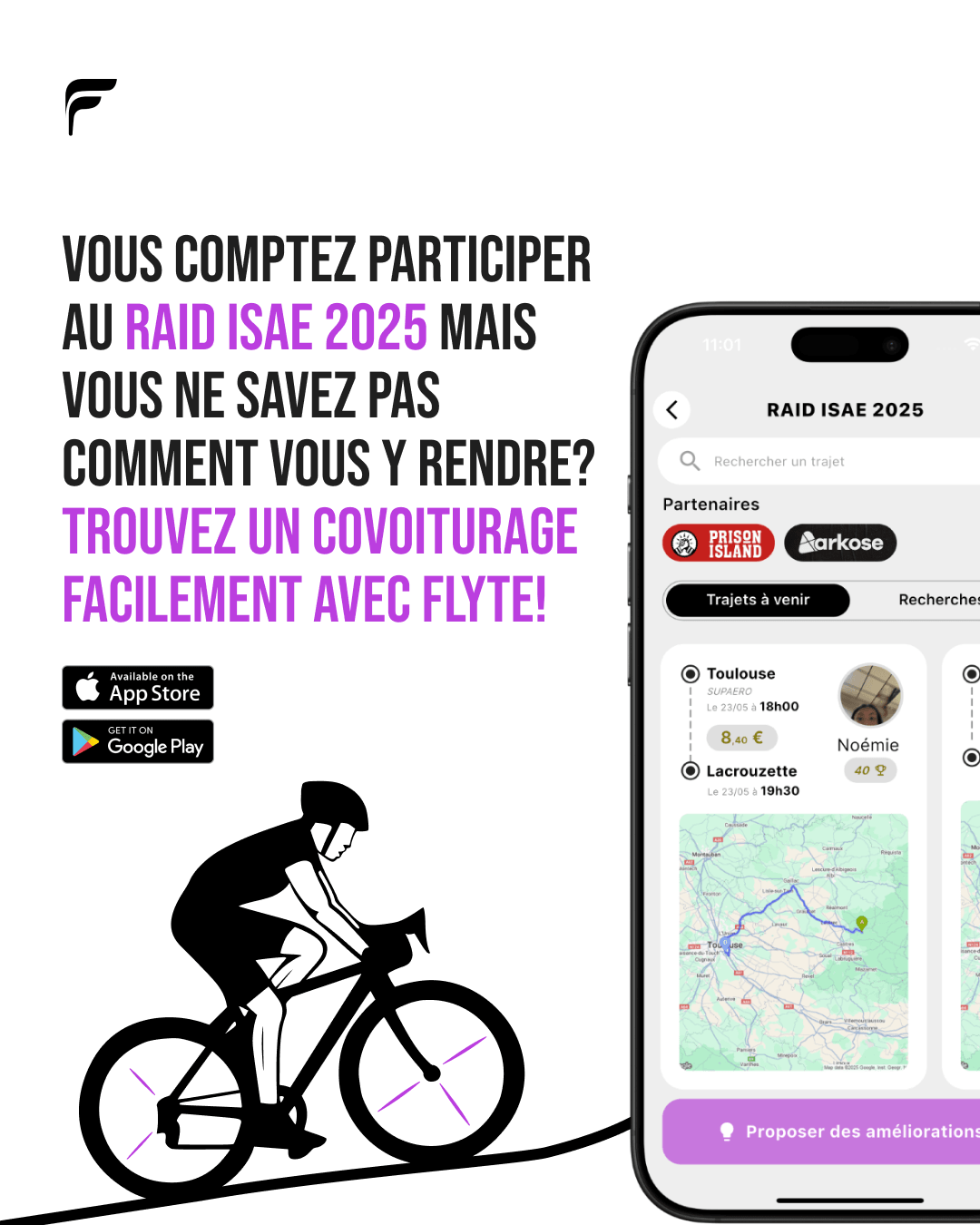
I didn't acquire users one by one. I went to institutions. I partnered with universities one by one — two schools first, then three, then five — building a dense local community where the app could actually work. Carpooling only works when enough people in the same area use it at the same time, so density was everything. Social media would never get us there fast enough.
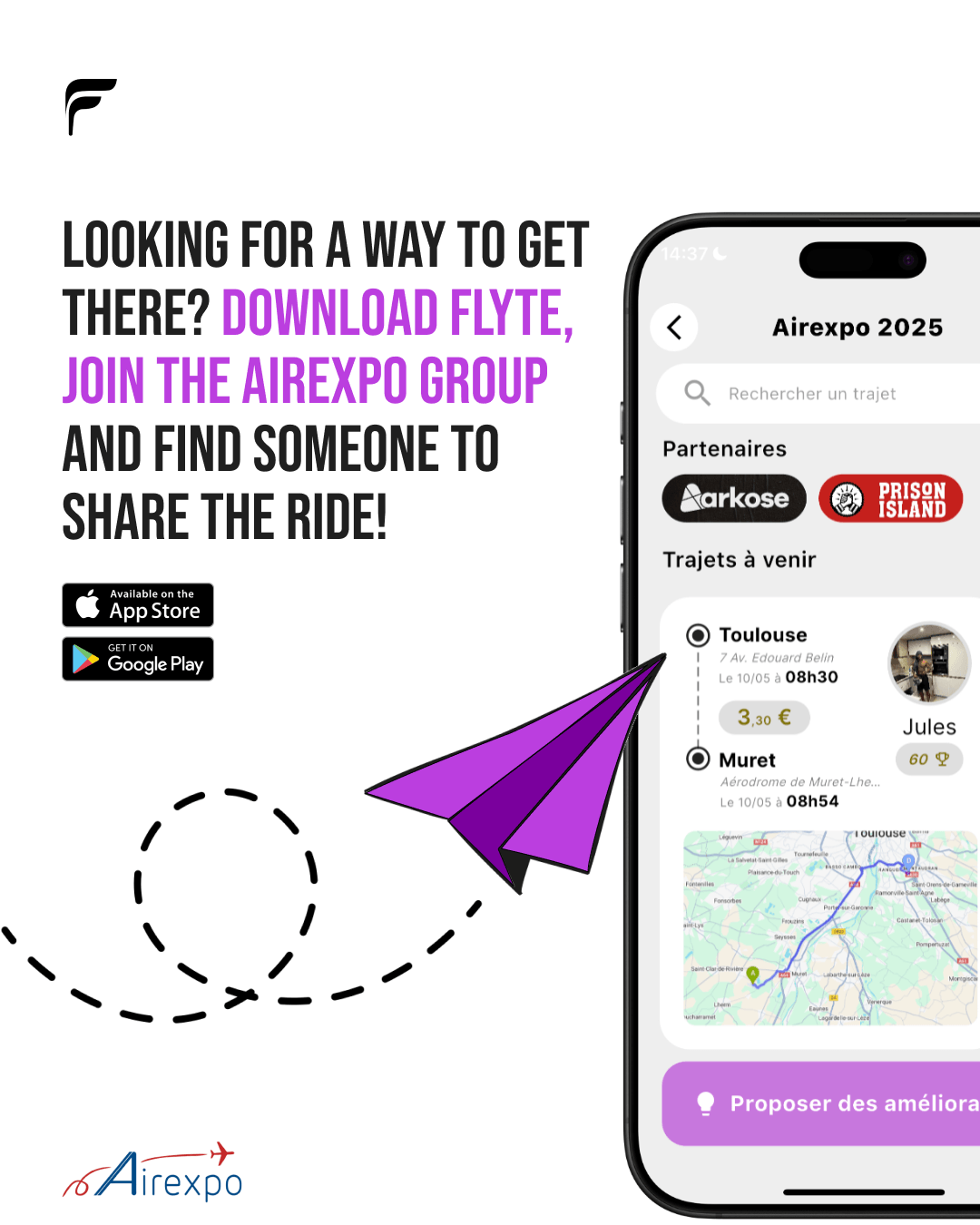
A partnership with Airexpo, the largest student aviation events in France, gave us the concentrated density we needed. That's how we reached 2,000 active users.
But that strategy masked a mistake I'd made from the start. I built the entire app in two months — heads down, no communication, no waitlist, no hype. By the time I launched, I had a finished product and zero users ready to test it. I'd lost the momentum I could have built during development.
I've never made that mistake again.
05 — The Team & Recognition
PwC Competition
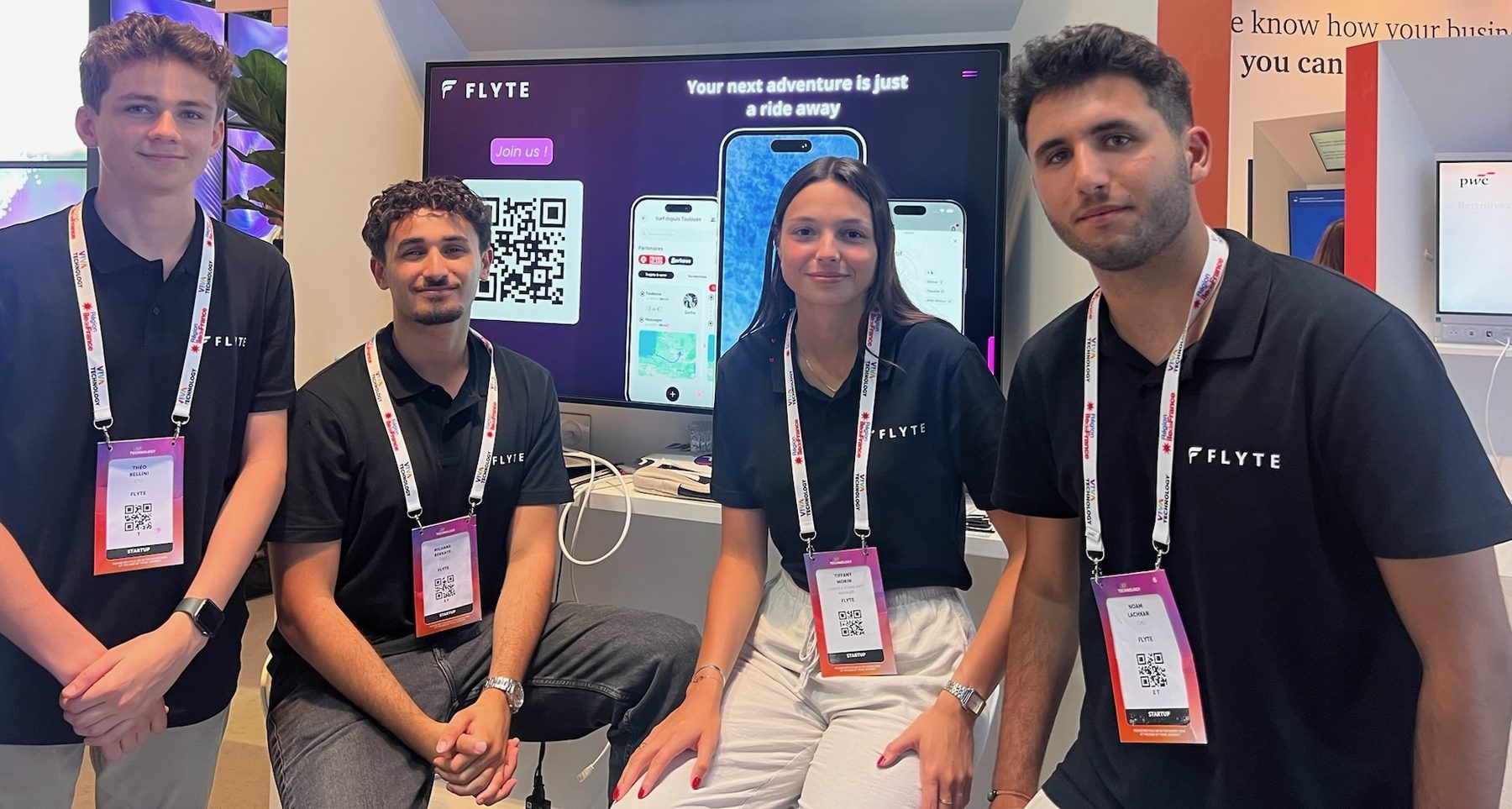
Out of 100+ startups, Flyte won the PwC startup competition. The prize: a booth at VivaTech — Europe's largest tech conference — a full day on the PwC stand, private product coaching sessions, and a one-on-one with a venture capital firm on fundraising strategy.
Competitions Won
Across the lifetime of Flyte, I entered and won 5 startup competitions — organised by my school, the city of Toulouse, and other institutions. Combined with grants, these wins secured €15K in funding that kept the project moving without external investment.
Leading 12 People
At peak, I was leading 12 people — 7 growth marketing students from a competition win, and 5 volunteers including a developer, a designer, and a product researcher. For the first time, I wasn't building — I was directing, prioritising, and unblocking. It was the most formative leadership experience of the project.
06 — The Hard Parts
- 01
The critical mass trap
Carpooling only works when enough people in the same area use it at the same time. Early on, genuinely interested users tried the app two or three times, found no ride available, and left — not because the product was bad, but because the network wasn't dense enough yet. Retention was structurally broken before critical mass. The Airexpo partnership solved it punctually — and that's how we reached 2,000 active users. The next step was more partnerships, more events, converting occasional users into daily ones. We were getting there.
- 02
No clear path to revenue
Students are the hardest audience to monetise — small fees per trip don't scale, and students don't pay easily. We tried B2B, targeting companies for their employees. But carpooling didn't save companies money or generate revenue for them — it was purely an employee benefit, and that wasn't enough for them to prioritise it. We had a product that worked and users who liked it. We never found a business model that worked alongside it.
- 03
The US, and what came after
I left for the University of Florida — the US dream I'd been chasing since Covid took it from me in 2020. Being there taught me more than I expected: how Americans think about products, about ambition, about building fast. I applied everything I learned to my next projects. When I came back, I needed income quickly — school, rent, life. Flyte couldn't provide that fast enough. Pausing was the right call. The product worked. The timing didn't.
07 — Results
- Active users
- 2,000+
- Secured in grants & prizes
- €15K
- People led
- 12
- Months building
- 10
08 — Where it stands
Flyte is on pause. The product worked — 2,000 people used it, trusted it, and came back. What stopped it wasn't the product — it was me running out of personal runway. As a student paying for school and rent, I needed income faster than Flyte could provide it. The timing was wrong, not the idea.
Everything I learned — about growth, marketing, selling, building hype before the product is ready, sharing it early with real users to shape it with their needs rather than assumptions — I'm now putting into Harvey, a project I believe in just as much.
Get in Touch
Want to talk about what I'd do differently?
Flyte is the project I learned the most from, and most of what I know about growth, timing and shipping early came out of it. Happy to go through any of it.